
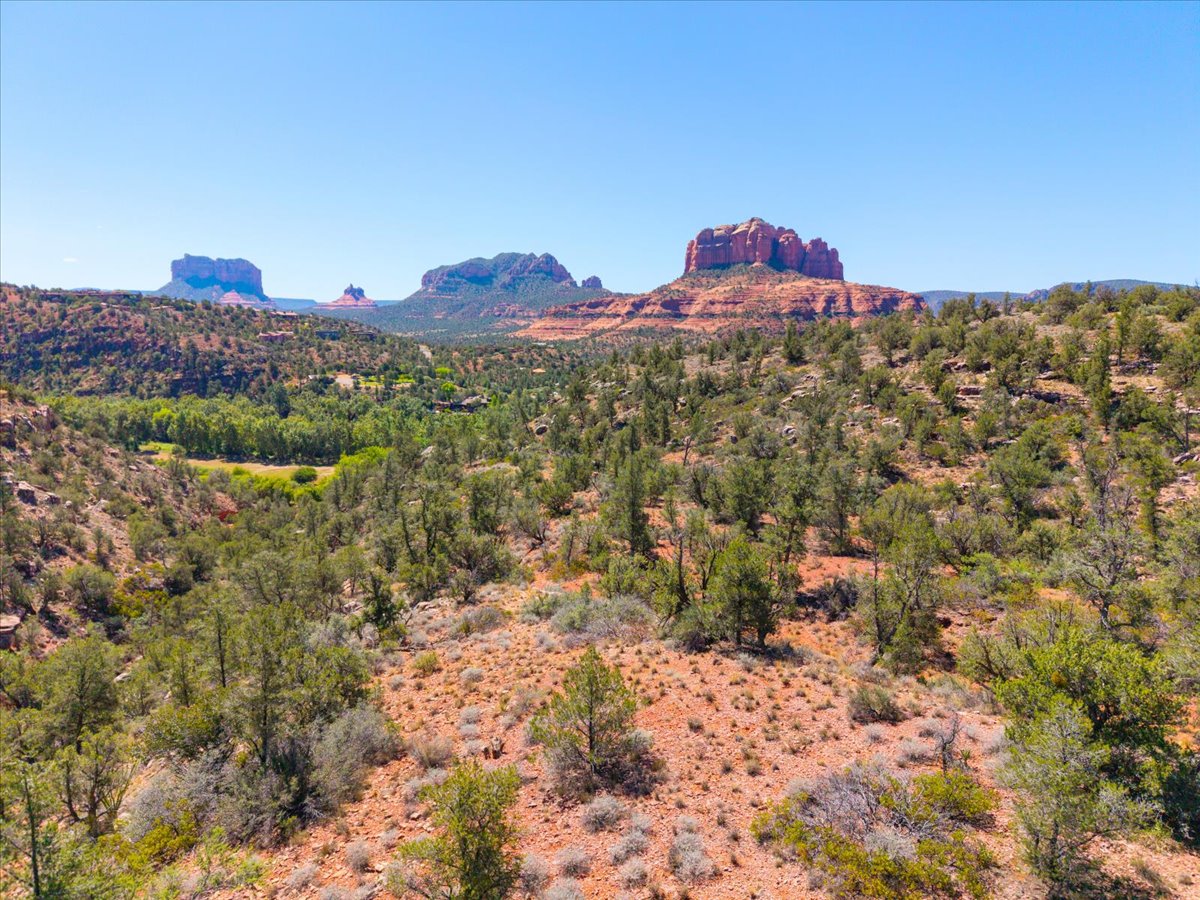
A beautiful Sedona parcel can look perfect from the road and still require substantial investigation before it is ready for a home.
Before purchasing vacant land, buyers should confirm the property's jurisdiction, permitted uses, legal and physical access, water source, wastewater options, utilities, terrain, drainage, and recorded restrictions. These details can affect what may be built, how much development could cost, and whether the property fits the buyer's plans.
1. Is the property governed by the City of Sedona or Yavapai County?
A Sedona mailing address does not tell you everything about the property's governing jurisdiction. Some properties are located within the City of Sedona, while others are in unincorporated areas governed by Yavapai County. That distinction affects where buyers verify zoning, setbacks, building requirements, and permitting procedures.
Before evaluating development potential, identify the parcel number, governing jurisdiction, zoning designation, applicable overlays, minimum setbacks, permitted uses, and whether the parcel is part of a recorded subdivision. Never assume neighboring properties establish what can be built on the parcel you are considering.
2. Does the property have legal and practical access?
A parcel may appear accessible without having the legal access or physical conditions needed for construction. Buyers should review the title commitment, recorded easements, subdivision documents, and available surveys.
Confirm whether access is public, private, or provided by a recorded easement; whether it reaches the intended building area; who maintains a private road; and whether grading, drainage work, retaining walls, or engineered access may be required. Legal access and a usable driveway are not the same thing.
3. What does the zoning actually allow?
The listing description is not a zoning determination. Buyers should confirm their intended use directly with the governing planning department, especially when considering guest quarters, multiple residences, a lot split, rental use, animals, or future subdivision.
Public zoning is only the starting point. Recorded plat notes, deed restrictions, development agreements, and private CC&Rs may impose additional limitations.
4. How will the property obtain water?
Do not treat "a well may be possible" as confirmation that the property has a reliable water solution. Depending on the parcel, water may come from a municipal or private provider, an existing private well, a shared well, or a proposed new well.
For an existing well, investigate its registration, location, ownership, available records, equipment, and any shared-well agreement. The Arizona Department of Water Resources well-record search allows searches by parcel number, although records may not reflect later parcel splits or combinations. Arizona generally requires a Notice of Intent before drilling, deepening, or modifying a well.
5. Is sewer available, or will the property require septic?
Sewer availability should be confirmed with the appropriate provider rather than assumed from nearby development. When sewer is unavailable, the property may require an onsite wastewater treatment system, commonly called septic.
Arizona's onsite wastewater permits are administered through delegated local authorities. A buyer may need appropriate soil and site evaluation before determining what kind of system can be permitted. Septic feasibility should be investigated early, particularly before finalizing the homesite, driveway, or lot-split concept.
6. What will the terrain require?
Red-rock views and dramatic elevation can be wonderful. They can also add engineering and construction considerations. Depending on the property, buyers may need to evaluate topography, slope, drainage, floodplain conditions, soil and rock, excavation, retaining walls, driveway grade, wildfire planning, and construction access.
City and county GIS tools are useful starting points. They do not replace a boundary survey, engineering analysis, or site-specific professional advice.
7. What utilities are actually available?
"Utilities nearby" does not necessarily mean utilities are connected to the parcel or economically practical to extend. Contact the applicable providers about electrical service, water, sewer, propane or gas options, internet, cellular service, trenching, easements, right-of-way requirements, and potential extension costs.
Whenever possible, obtain written information directly from the provider. Development estimates can change as plans, distances, and site conditions become clearer.
8. What private restrictions apply?
The title commitment, recorded plat, CC&Rs, easements, and other recorded documents may affect building location, architecture, property use, road maintenance, animals, rentals, or future division of the property.
If a buyer's plans depend on a particular use, that use should be verified during the due-diligence period with the appropriate professionals and governing entities.
A better way to evaluate Sedona land
The goal is not to eliminate every unknown before writing an offer. It is to identify the important unknowns, create an appropriate investigation period, and avoid basing the purchase on assumptions.
A thoughtful review may involve a REALTOR®, title company, surveyor, civil engineer, architect, builder, utility provider, septic professional, well specialist, and the appropriate planning department. Not every parcel needs every professional. The intended use should determine the investigation.
Frequently asked questions
Is vacant land in Sedona difficult to build on?
Some parcels are relatively straightforward, while others require significant work related to access, slope, utilities, wastewater, drainage, or engineering. The parcel and the buyer's proposed home must be evaluated together.
Can I divide a large Sedona parcel?
Possibly, but acreage alone does not establish whether a parcel can be divided. Zoning, recorded subdivision status, access, utilities, wastewater requirements, and local subdivision rules may all apply.
Does vacant land in Sedona usually have utilities?
It varies substantially. Buyers should distinguish between utilities located somewhere nearby and utilities that can realistically be extended to the intended homesite.
Can I drill a well on Sedona land?
A well may be an option for some properties, but feasibility, registration, and regulatory requirements must be investigated. Arizona generally requires a Notice of Intent before drilling, deepening, or modifying a well.
Should I speak with a builder before purchasing land?
When development costs or constructability are central to the decision, early input from a qualified builder and appropriate design or engineering professionals can be extremely useful.
Information is provided for general educational purposes and is not legal, engineering, zoning, environmental, or construction advice. Property conditions, regulations, and development requirements vary. Buyers should independently verify all material facts.